March 28: Antalya to Olympos
Gate below Termessos proper
Previous | March 28 Index | Next | Eclipse
Home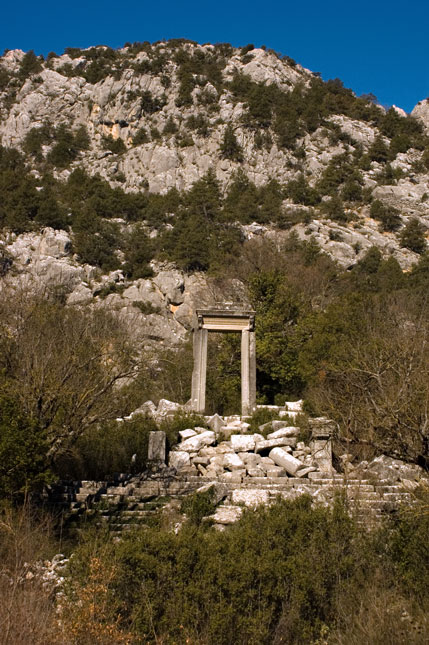
From this gate it is a 20-30 minute steep walk/hike (with some scrambling over rocks and fallen ruins) up to the city proper. The site is unspoiled and there are no concessions or tourist sales people. A real delight!
Termessos was inhabited by the Pisidians, an indigenous Anatolian nation of noted ferocity. The city first appears in history during the conquests of Alexander the Great. Alexander swept through the region but after winning a skirmish in the narrow mountain passes near the city, declined to storm it. In the Hellenistic period, Termessos gradually "Hellenized," adapting Greek culture, language and even becoming a democracy. The impressive theatre was built during this period, no doubt serving as both entertainment venue and political meeting place. The theatre seats 4000-5000 and the "rule of thumb" we learned for estimating population is to multiply theatre size by 10. If that is accurate there were 40,000+ very hardy people living in this mountain pass. Throughout the period, Termessos was engaged in frequent warfare with its neighbors, often taking on more than one. For its help in his campaign against Selge (c. 158 BC), Attalus II of Pergamum erected the city's elegant stoa.
Termessos passed easily into Roman friendship and later empire. The city received considerable autonomy for its role against King Mithridates. It guarded its privileges jealously; remarkably, its coinage never included either image or title of the Emperors. Most of the city's buildings were erected in this period, including a temple to the Emperor Hadrian. At some point the city Christianized, and bishops from Termessos participated in the early church councils, but the city was abandoned between the 5–7 centuries. (Remoteness and earthquakes may have both played their part.) Except for the occasional nomad it lay empty after that, which explains its relatively pristine state.