April 1: Fethiye to Pamukkale
Telmessos (Fethiye) stone carved tombs
Previous | April 1 Index | Next | Eclipse
Home 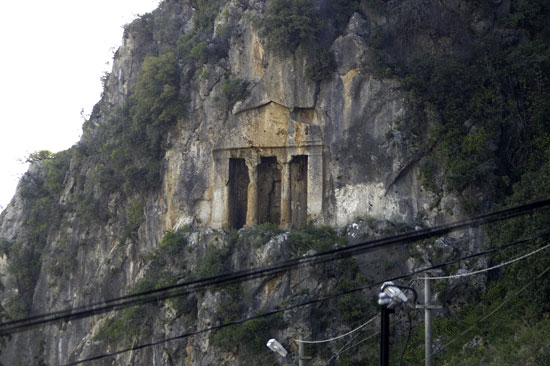
The most striking ancient remains of Telmessos are a number of fine rock tombs of characteristic type, modeled on Lycian timber-built architecture and later Ionian temple architecture. The main group is in the rock face to the east of the present built-up area. Particularly notable is the Tomb of Amyntas, which is dated to the fourth century B.C.
All pre-Greek people of Anatolia built beautiful monumental tombs associated with some form of ancestor worship. The Lycians developed this form of art to perfection, no doubt facilitated by the soft limestone of the region. The quality of stonemasonry of the Lycian people is noteworthy and is especially significant in the construction of tombs. Today the entire landscape of Lycia is still dotted with their fascinating funerary monuments. The most recent count has revealed one thousand and eighty-five examples still intact, rock-cut tombs being the most common form.
The Lycians seem to have held a belief that the souls of their dead would be transported from the tombs to the afterworld by a sort of winged siren-like creature, and so often placed their tombs along the coast or at the top of cliffs.